
Muay Thai Rules, Scoring and Fouls

If you train here long enough, you stop treating “the rules” as one book. The art is the same. The eight limbs are the same. The ring still smells of liniment, and the sarama still starts the round. What changes, from one set of ropes to the next, is what the judges are paid to see.
A clean teep that turns a hip can win a round at Rajadamnern and barely register on a card that is hunting damage. A long clinch that dumps a tired opponent in round four is textbook stadium Muay Thai. On a ONE card the referee is often already stepping in. Elbows that open a cut are gold in Bangkok, and illegal the moment the bout is billed as kickboxing.
This is the version we walk students through before a first fight, and the version we wish more visitors read before they argue with a scorecard. It is not a substitute for the sheet of the promotion you are actually fighting under. Stadiums, sanctioning bodies and television shows all move the small print. Read that sheet. Use this to understand why it exists.

Eight limbs, and what the rules protect
Muay Thai is striking with eight weapons: two fists, two elbows, two knees and two shins, or the feet when the technique calls for them. In the gym you will hear them called the mai muay, the weapons of the art. Everything legal in a proper Muay Thai bout comes from those eight. Everything that starts to look like wrestling, judo or ground fighting is where the referee’s hands go up.
The legal targets are the front and sides of the head, the body, and the legs. You may strike with the glove, the elbow, the knee, the shin and the foot. You may catch a kick. You may clinch, off-balance, sweep and knee from the hold. You may not turn the clinch into a grappling match, and you may not follow an opponent onto the canvas.
A few things still surprise people who arrive from boxing or kickboxing. Elbows are a full weapon, not a foul. Low kicks to the thigh and calf score, and a leg that stops checking is a scoring story, not just a setup. The clinch is not a rest. In Thai stadium judging it is one of the highest expressions of the art, provided you are doing something with it. A sweep that takes the standing leg with the foot or shin is generally legal. A hip throw, a suplex, or locking an arm is not.
Defence is part of the score in traditional judging. A fighter who shells, catches and answers is not “running” just because they are not marching forward. Balance, posture and the look of the art still matter in a Thai ring in a way they do not in a pure damage ruleset. We would rather see a student miss a clean kick and stay on their stance than land a messy punch and fall into the ropes.
How a bout is built
The classic professional fight in Thailand is five rounds of three minutes, with two minutes of rest. That is the shape Lumpinee’s published stadium rules describe as the normal ceiling: not more than five rounds, and not fewer than three, each round three minutes, each interval two minutes. It is no longer the only shape you will see, even in Bangkok.
Rajadamnern runs different products on different nights. New Power and Petchyindee nights are typically five-round fights. Rajadamnern World Series cards are built around three-round bouts, with a five-round title in the main event, and open scoring after rounds so the crowd can watch the cards move. WMC and WBC Muaythai title fights are five rounds of three minutes. ONE Championship uses three rounds of three minutes for ordinary bouts and five for world titles, with one minute of rest either way. IFMA amateur elite bouts are three rounds of three minutes, also with one minute of rest, in protective equipment.
The two-minute Thai interval is not a small detail. It is long enough for a cutman to work, for a coach to reset a plan, and for a fighter who was hurt to come back out looking composed. A one-minute break keeps damage and fatigue in the fight. Corners have less time to hide a bad round. If you are used to the stadium clock and then take a ONE or amateur bout, that missing minute changes how you spend the third round.
A standard ring is about 6.1 metres square on the smaller specification and about 7.3 metres on the larger, measured inside the ropes, with four ropes. Red corner on the chairman’s left, blue opposite. You do not grab those ropes to fight, to stall, or to pull yourself up. Professional gloves in Thailand are laced boxing gloves, sized by weight: lighter divisions around 6 oz, the middle weights around 8 oz, heavier divisions around 10 oz. The contract sets the exact number. Male professionals wear a groin guard. A mouthpiece is compulsory. The mongkon comes off before the first bell. The prajioud stay on.
Traditional stadium weigh-ins are same-day, typically in the morning for an evening card. Miss the weight and you are negotiating, moving up, or not fighting. ONE uses a hydration test and a weigh-in further out, so fighters are not cutting into the night before. Do not assume a Thai stadium weight cut and a ONE weight cut are the same job. We treat them as different camps.
What you are allowed to throw
The four weapons named in the World Muaythai Council rules are fists, feet, knees and elbows. That list is the spine of every serious Muay Thai rulebook, and it is the list we coach to. Punches to legal targets score when they land with weight. A punch on the glove or the forearm is a miss. Kicks with the shin to the leg, body and head score. A teep that moves the opponent is a strike. A teep that is only a shove, with no weapon behind it, is often ignored.
Knees are straight, diagonal, curved or flying, to the body and the head. Knees to the thigh score in a Thai ring more than visiting fighters expect. Knees to the groin are a named foul. Elbows — horizontal, diagonal, uppercut, spinning — are the cut weapon. An elbow that lands on the crown or the back of the head is a foul under rules that protect the spine. An elbow that slices the eyebrow is the point of the technique. In kickboxing this entire family disappears. If the bout is billed kickboxing, assume elbows are out until the contract says otherwise.
The clinch is legal. You may tie up, swim for inside position, off-balance, trip and knee. You may not lock a joint, crank a neck into a submission, or lift and dump with a wrestling throw. The line Thai referees actually police is activity. Knees, elbows and a genuine sweep keep the clinch alive. Hanging on the neck to breathe gets you broken. How long you are allowed to hang is one of the biggest differences between rulesets, and it is the question we ask at every rules meeting.
You may catch a kick and answer with a sweep or a strike. You may take up to two steps with the caught leg. Pushing that leg more than two steps without using a weapon is a foul under WMC, Lumpinee and the Unified Rules. Pretending to fall the moment your own kick is caught, so the opponent cannot counter, is also a foul. Kicking an opponent’s supporting leg out with the foot or shin is legal. A hip throw, a shoulder throw, or lifting the opponent by the body is not. If you are down on the canvas you are not a target. Following a fallen opponent is a foul. There is no ground-and-pound in Muay Thai.

How a round is scored
At Lumpinee, the published scoring is not the boxing 10-point must. The better boxer in a round is given 5 points. The opponent receives 4½, 4, 3½ or 3. A level round is 5–5. Three judges score. The winner is the fighter who uses the weapons — fist, kick, knee, elbow — more often, or more severely, clearly and violently, on the important targets. In the gym we translate that into something you can train.
A kick or a knee that lands on the trunk with the hip behind it always matters. A stiff body kick that folds the opponent, even for a step, is the classic scoring strike of a Thai ring. Elbows that cut or visibly stun sit above punches that look busy. Punches score, but a punch is the lightest of the eight limbs unless it does clear damage. WBC Muaythai’s own example is the one we repeat: a well-executed body kick can outscore a counter straight punch, because it is harder to land and more effective in the language of the art. Strikes on a guard do not count. Light taps with no body weight do not count. Volume without effect is how fighters win the crowd and lose the judges.
Clinch dominance is real scoring. Inside position, knees that land, sweeps that put the other fighter down, and the look of control all go on the card. Balance and composure are scored. A fighter who is swung off their feet, who paws at the ropes, or who looks exhausted is losing the round even if they are still throwing. Forward pressure is a tie-break, not the whole criteria. Marching in behind a high guard while eating clean kicks is not aggression a Thai judge rewards.
Round weighting is the stadium habit foreign scorecards miss. Judges are not required to treat minute one of round one like minute three of round four. Rajadamnern’s guidance has long put extra weight on the middle rounds, classically rounds three and four. Lumpinee judging has often leaned on the later rounds. A fighter who steals round one with a flurry and then spends rounds three and four being knee’d is usually losing the fight, whatever the punch count says. This is why Thai fighters often give away the first round. They read the opponent, save the legs, and start the real fight when the judges are paying the most attention.

Most international professional rules write the same idea in boxing numbers. The winner of a round must receive 10. The loser receives 9, sometimes 8, rarely 7. An even round is 10–10. The World Muaythai Council gives the advantage to the fighter who lands on target most, lands heavier and more accurate shots, causes more exhaustion, shows the better style of aggressive attack, defends better, and fouls least. No credit for a blow on the arms or legs used as a shield. No credit for a hit without power or body weight behind it. No credit for a throw that is not attached to a Muay Thai weapon. A normal round is 10–9. It becomes 10–8 when the winner is clear, or the loser takes a count. It becomes 10–7 when a clear winner also scores a count, or the loser is counted twice. A formal warning costs a point.
A knockdown is a fighter touching the canvas with something other than the feet, being pushed out of the ring, or being unable to defend intelligently. Not every trip is a knockdown. A clean sweep, where the fighter pops straight back up, is often scored as a technique rather than a count. The referee decides. Three knockdowns in a round, or a stated number across the bout, is a technical knockout under several professional rules. WMC language stops a bout on a third count in a round, or a fifth count in the contest. ONE’s published rule is three knockdowns in a round or four in the bout. Standing eight-counts are an amateur habit. Many professional Thai bouts do not use them.

Looking for a Train & Stay Package?
We offer fully inclusive stay & train packages starting from just 8,900 baht per week — training, accommodation, airport transfers and full gym access all included. Expand each option below to explore what’s right for you.






Standard Package
Train hard and stay comfortably. This budget-friendly package includes quality accommodation close to the gym with clean, air-conditioned rooms. Perfect for dedicated trainees and long-stay students who want authentic Muay Thai, great value, and easy access to daily training without any fuss.
- AC
- Fridge
- Private bathroom with hot water
- Free WIFI
- A few minutes' walk from gym
- Self-catering


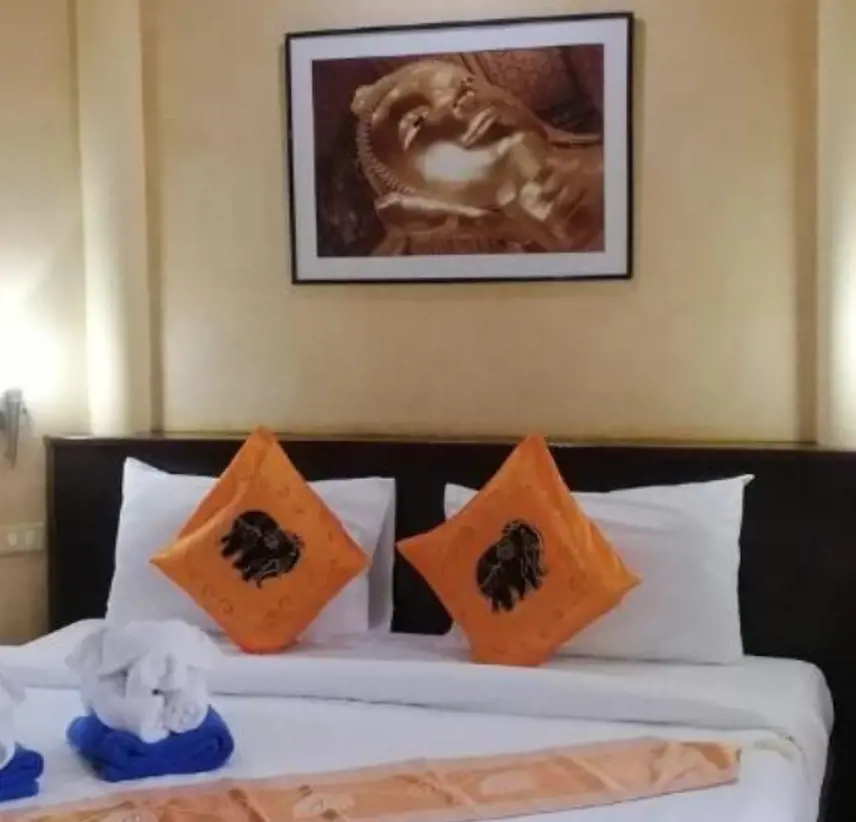



Deluxe Package
Enjoy training and relaxation in equal measure. This package offers comfortable modern rooms with pool access in a peaceful setting near the gym. Ideal for couples and longer stays who want a relaxed tropical atmosphere alongside high-quality Muay Thai coaching.
- AC
- Fridge, kettle, coffee/tea in the room
- Private bathroom with hot water
- Free WIFI
- A few minutes' walk from gym
- Breakfast: optional
- Daily cleaning






Luxury Package
Train hard by day and unwind in style. This premium package includes modern accommodation with resort facilities and sea views. Perfect for couples and long-stay students who want extra comfort, beautiful surroundings, and easy access to world-class training.
- Deluxe rooms wit AC
- Fridge, kettle, coffee/tea in the room
- Private bathroom with hot water
- Free WIFI
- Beachfront
- 15-20 minutes walk from the gym
- Breakfast included
- Daily cleaning
Custom lengths and fight camps available. Prices are per person, twin share. Single supplement on request. Contact us for current Agoda-linked deals and long-stay discounts.
Fouls, warnings and lost fights
Rulebooks list fouls as if fighters study them. In the ring they cluster, and these are the ones that decide nights. Biting, spitting, eye raking, sticking the tongue out as provocation, and headbutts can be a straight disqualification. An accidental clash of heads is common in the clinch. A deliberate one is not. The referee judges intent. The corner does not.
A knee up the middle while you hold the head down is the foul every clinch fighter is warned about. It can be careless. It can also be a tactic. The first is often a caution. The second, or a repeat, is a point or the fight. Under WMC rules the referee can give the fouled fighter recovery time of not more than five minutes. A fighter who then refuses to continue can be ruled the loser, or the bout a no-decision, depending on how intentional and how damaging the foul was. Faking a worse injury than you have, and then staying down, is a good way to lose a bout you were winning.
Hip throws, suplexes, body-lock lifts, arm locks and back-breaking postures are fouls. The sport already has a sweep. You do not need a judo syllabus. When an opponent is on the canvas, you stop. When they are getting up, you stop. Pretending to fall onto them is its own foul. Grabbing a rope to pull, to stay up, or to stall is a foul you will see every card, and a caution you will see every card.
The caught-leg rule is the one students forget under pressure. More than two steps without a strike or a sweep, and you are taking a free ride. Expect a caution, then a warning, then a point. Falling over on purpose when your kick is caught is the mirror foul. If the referee says yaek — break — and you throw a knee on the way out, that knee can cost you the fight, especially if it hurts the opponent. The break is not a suggestion. This is the foul corners underestimate.
International rules, including IFMA, WBC Muaythai and the Unified Rules used by many Western commissions, forbid strikes to the back of the head, the neck and the spine. Older stadium sheets are less explicit. Do not make the spine your strategy. Holding the shorts, the hair or the glove draws cautions quickly because it is obvious on a replay. WADA rules apply under WMC sanctioning. The ladder is usually caution, then formal warning with a point off, then disqualification. Severe fouls skip the ladder. Judges also fold fouls into the round even before a point is taken: the fighter who fouls least has the edge when the round is close.
A fight ends by knockout, by technical knockout from the referee, the doctor or the corner, by decision, by draw, by disqualification, by no-decision, or by walkover if the opponent misses weight, fails the doctor, or does not appear. Two fighters counted out together can be a draw. Retirement and a towel from the corner are both a loss, and both are honourable. Learn the count in Thai if you are fighting here. Nueng, song, sam, si, ha, hok, jet, paet, kao, sip. If you can hear it, you can stand up to it.
Stadium, amateur and ONE are not the same fight
Lumpinee and Rajadamnern are the reference version. Five-round shape where the card is traditional, two-minute breaks, eight limbs, a long clinch if you are working, and scoring that cares about kicks, knees, elbows, balance and the later rounds. Lumpinee’s sheet scores rounds out of 5. Rajadamnern’s live product now includes three-round television fights with open scoring, which pulls the tactics toward banking a visible moment early because the card is on the screen after each round. If you are fighting on a Thai stadium show, we ask three questions at the rules meeting. How many rounds? Is scoring open? How long will the referee let a working clinch run?
WMC and WBC Muaythai are the international professional books. Five-round title fights, 10-point must, explicit foul lists, and criteria built around effect, accuracy, exhaustion and defence. WMC is the closer translation of stadium Muay Thai into a written global code. WBC Muaythai’s “damage, dominance, disruption” language is the sentence we would put on a gym wall. They are still not identical to a weeknight at Lumpinee. Western judges applying a WMC sheet often reward volume and forward motion more than a Bangkok judge does. If your opponent is foreign and the judges are foreign, do not assume a beautiful third-round clinch will be read the way it would be on a Thai stadium card.
IFMA amateur is Muay Thai built for tournaments and safety. Three rounds, one-minute rests, head guard, shin guards, elbow guards, often a body protector. Scoring leans on clean, forceful strikes. A published conversion used in recent comparisons of the elite rules is roughly this: a margin of seven or fewer clean scoring blows is a 10–9 round, eight to fourteen is 10–8, and fifteen to twenty-one is 10–7, with force deciding a level count. You cannot fight an IFMA final like a stadium main event. The guard and the shin pads blunt the weapons Thai judging loves. Busy, accurate, balanced striking wins tournaments. Fighters who only know stadium sparring get frustrated. Fighters who learn to touch clean and turn the hip still do very well.
In a Thai stadium, the fighter who looks like Muay Thai usually beats the fighter who merely hits. Under a damage ruleset, the fighter who hurts the other one usually beats the fighter who merely looks correct.
ONE’s Global Muay Thai Rule Set is a different sport wearing the same name. That is not an insult. It is the useful way to camp for it. Every athlete wears 4 oz open-finger gloves. Ordinary bouts are three rounds of three minutes with one minute of rest. World titles go five rounds, still with one minute of rest. You can win by knockout from a punch, kick, knee, elbow or legal throw, by technical knockout, by three knockdowns in a round or four in the bout, by decision, by technical decision, or by disqualification. Three judges score on the 10-point must. If the totals are level, the tie-break is fixed: knockdowns, then damage, then the number of clean strikes, then aggression and ring generalship.
The clinch stays legal, including knees, elbows and sweeps, and a legal throw can end the fight. In practice the referee breaks stalling clinch work fast. Corners talk about a few seconds of inactivity, and the tolerance varies by official. You cannot lean, breathe and knee once every ten seconds. Punches, the junior weapon in a Thai stadium, become a primary weapon because of the glove. Elbows stay legal. That is the line between ONE Muay Thai and ONE kickboxing, where elbows are out. In late 2025 ONE moved to a redesigned 4 oz glove that covers the thumb, to cut down eye pokes, without changing the weight.

| Thai stadium | WMC / WBC pro | IFMA amateur | ONE Muay Thai | |
|---|---|---|---|---|
| Usual rounds | 5 x 3 min, some cards 3 | 5 x 3 min titles | 3 x 3 min | 3 x 3 min, titles 5 |
| Rest | 2 min | 2 min | 1 min | 1 min |
| Gloves | 6–10 oz laced, by weight | Boxing gloves, by contract | Head, shin and elbow guards | 4 oz MMA gloves |
| Scoring | Often out of 5; effect and later rounds | 10-point must; effect and dominance | Clean forceful strikes | 10-point must; knockdowns and damage lead |
| Clinch | Central, if you are working | Legal and valued | Legal, less decisive | Legal, broken quickly if stalled |
| Elbows | Full weapon | Full weapon | Legal, but padded | Full weapon |
Treat the cells as a map, not a contract. The paper you sign is the contract. Rajadamnern World Series sits between the stadium and the television product: three-round fights, a five-round title on top, open scoring, and a crowd that can see the cards. The art is still Thai. The short fight pushes you to make the round obvious.
What we tell fighters in the week of the bout
Score the fight you are in, not the fight you watch on your phone. If it is a five-round Thai stadium bout, spend round one reading the lead leg and the habit in the clinch. Land one or two body kicks you are sure of. Do not empty the tank to make a statement. Start the scoring fight in round three with kicks, knees and a clinch you can actually hold. If you are down on the cards going into the championship rounds, that is a Thai fight, not a crisis, provided you are still balanced and still landing the heavy weapons.
If it is three rounds with open scoring, every round is a final. Make one action per round that a judge can name. A sweep, a cut, a knockdown, a knee that folds them. Busy hands with nothing behind them will not move a public card. If it is ONE, respect the glove. Punch with intent, because the punch now scores like a weapon. Do not accept a clinch you cannot knee out of inside a few seconds. A knockdown is the highest currency on the card. Do not give away a round. There are only three.
If it is amateur, touch clean. Turn the hip so the strike is obvious. Do not hunt a finish the head guard is designed to prevent. The fighter who looks in control of the centre and lands the cleaner shots wins tournaments. In every ruleset the foul list is the same advice. Keep the knee off the cup. Get off the rope. Let go of the leg after two steps, or hit something. Freeze when they go down. Freeze when the referee says break. The fastest way to lose a fight you are winning is a late foul you thought was small.
The wai khru ram muay before the first round is not a dance bolted onto the sport. It is the fighter acknowledging the teacher, the camp and the opponent. Judges are not scoring it. Thais in the seats are. A fighter who rushes it, or refuses it, starts the night with the room against them, and rooms have a way of leaking into close cards. The mongkon is the teacher’s mark. It is removed by the coach, not tossed to a friend. The prajioud stay on for the fight. None of this changes a 10–9 round. All of it changes how you are treated when the round is 10–10 and someone has to choose.
Learn both readings of the art, and fight the one written on the bout agreement. If your first fight is local, spend more time on the body kick and the plumb than on the punch count. The judges already know which weapon they came to see.
Frequently Asked Questions
How many rounds is a Muay Thai fight in Thailand?
A traditional stadium fight is five rounds of three minutes, with two minutes of rest. Lumpinee’s published rules allow between three and five rounds. Rajadamnern World Series and many television cards use three-round bouts, with five rounds kept for the title.
Do blocked strikes score?
No. A strike that lands on the arm or the leg used as a shield does not score, and neither does a light tap with no body weight behind it. Judges are looking for effect on a legal target, not volume.
Is the clinch legal in Muay Thai?
Yes. Knees, elbows, off-balancing and sweeps from the clinch are part of the art. Joint locks, wrestling throws and holding without working are not. ONE keeps the clinch legal but breaks it quickly if both fighters stall.
What is the difference between stadium scoring and ONE scoring?
Stadium judges favour kicks and knees to the body, elbows, clinch control, balance, and the middle and late rounds. ONE scores each round on the 10-point must and, if the cards are level, breaks the tie on knockdowns, then damage, then clean strikes, then aggression. All rounds count the same, and the gloves are 4 oz.
Can you be disqualified for a groin strike?
Yes. A deliberate or repeated knee to the groin can cost a point or the fight. The referee may allow recovery time. Refusing to continue after that time can lose you the bout, or turn it into a no-decision, depending on the rules of the show.
Are elbows allowed in kickboxing?
Not in a standard kickboxing bout. Elbows are a full Muay Thai weapon and the main difference between ONE Muay Thai and ONE kickboxing. Always read the bout agreement before you camp for a show.